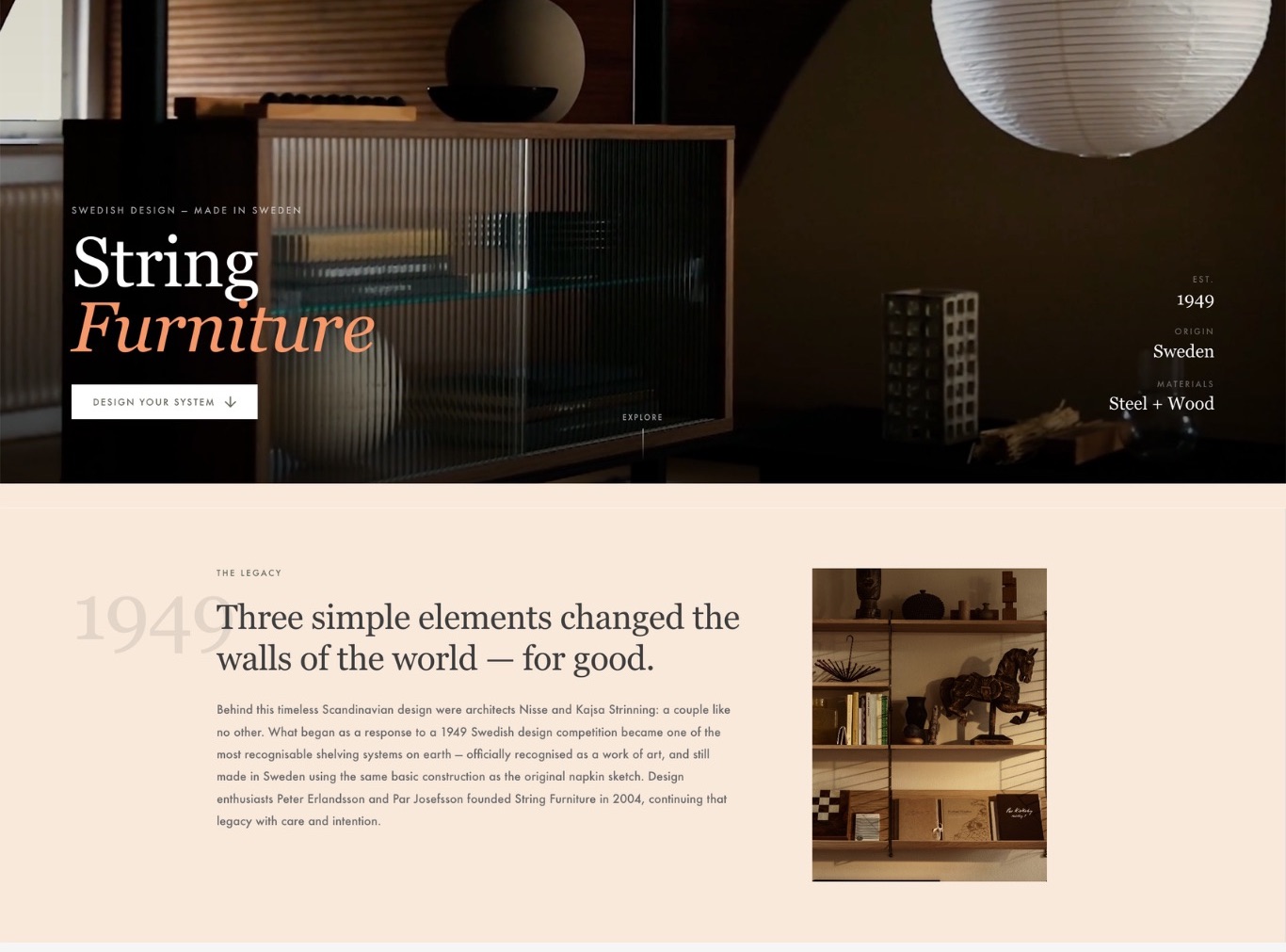
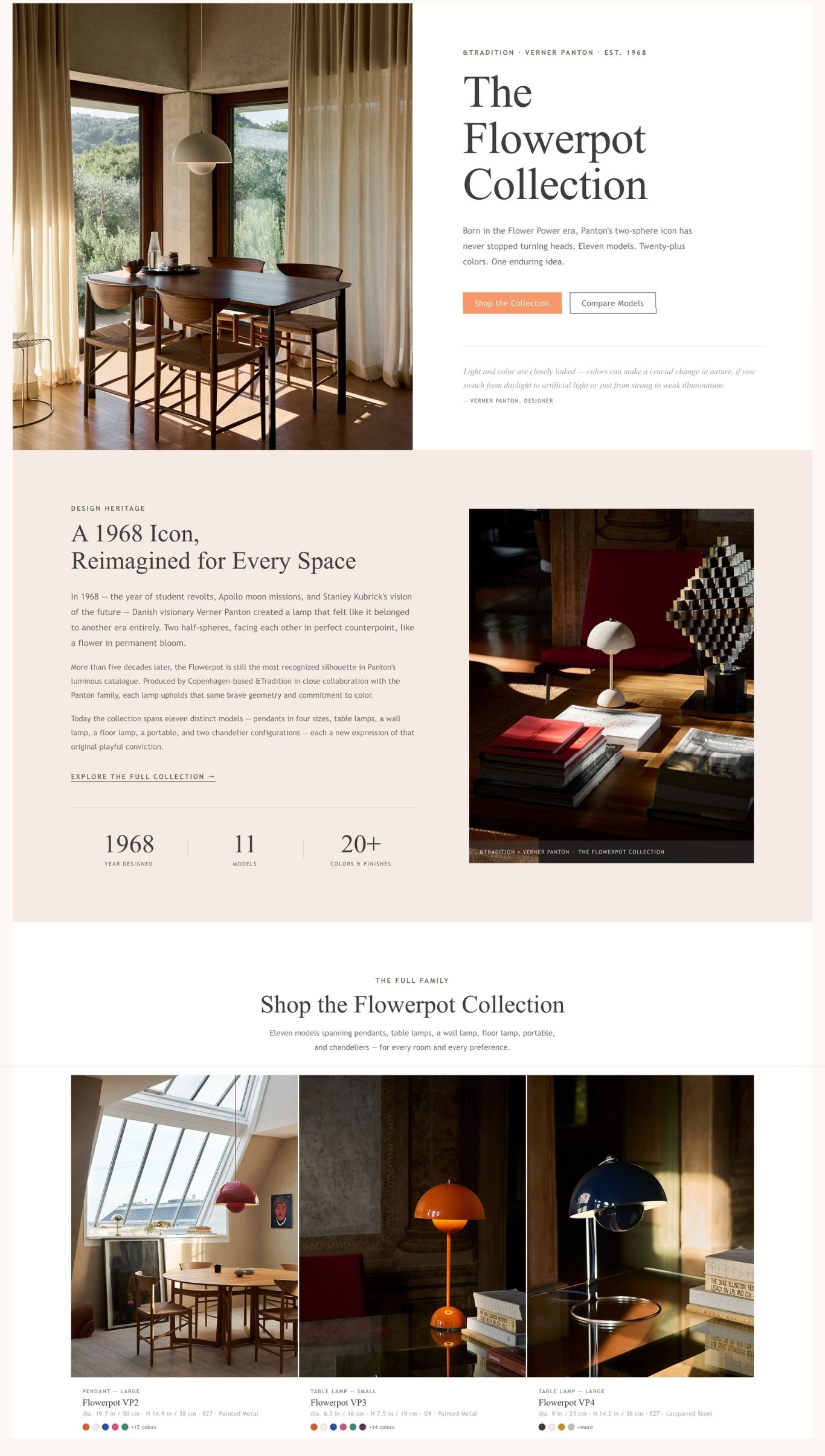
Flowerpot Collection Landing Page
The Flowerpot by Verner Panton is one of the most searched lighting designs in Scandinavian modernism. Lekker carries the full collection, but that inventory was scattered across individual product pages with no central hub, no editorial context, and no content structured for how people actually search for it.
The brief was to build a dedicated collection page that gathered every Flowerpot model in one place, introduced the design’s heritage, and layered in the content signals needed to improve Lekker’s visibility in AI-generated search results: comparison charts, buying guides, FAQs, and structured editorial copy.
My role
This project sat at the intersection of editorial content and search strategy. The page needed to work as a genuine shopping and discovery experience while also being built with the structured content signals that AI-powered search tools use to surface results.
Identified the search queries and question formats most likely to surface in AI-generated results for the Flowerpot collection. Structured the page around those patterns: comparison content, specific product questions, use-case guidance, and authoritative brand context.
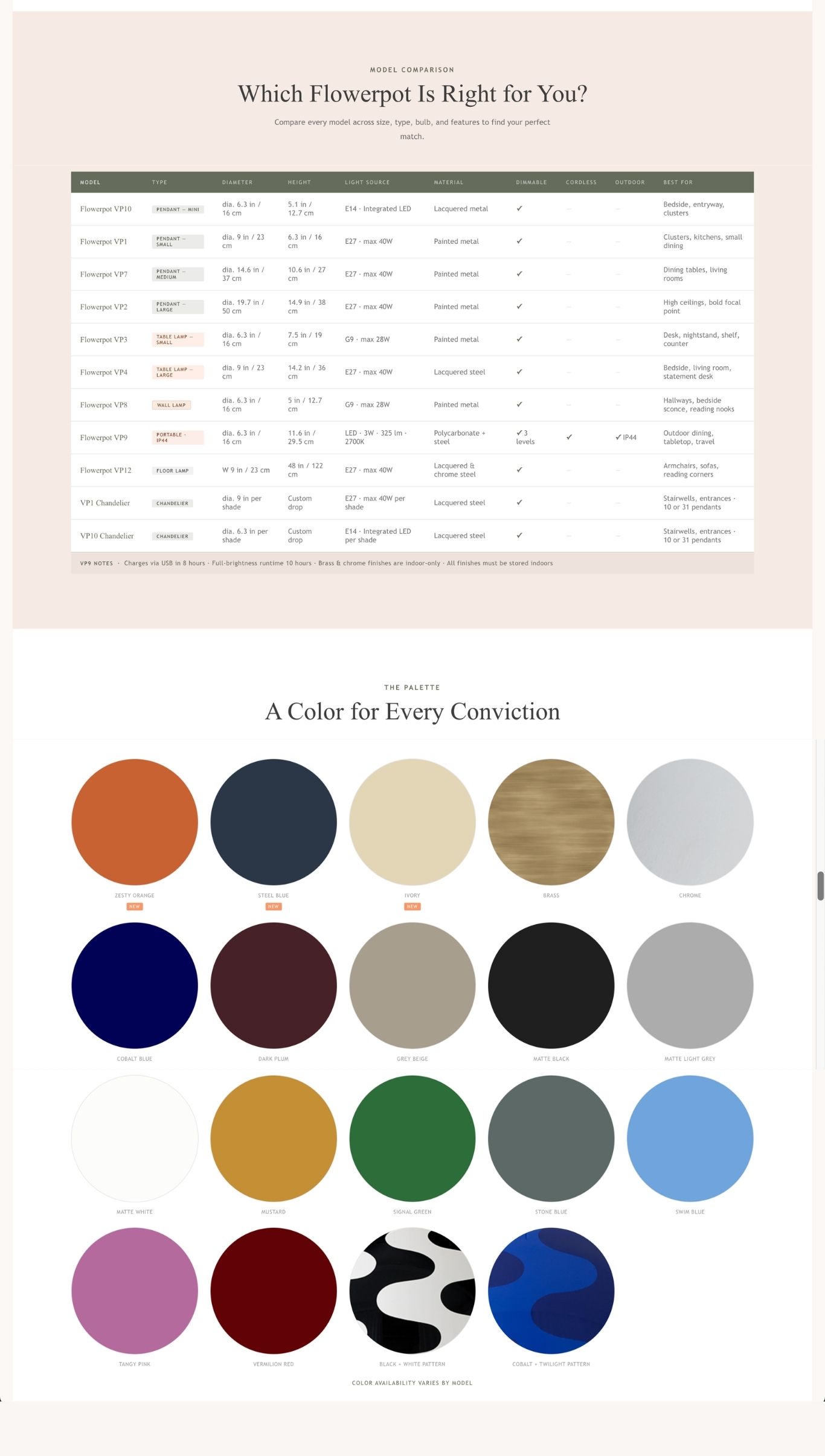
Built a complete side-by-side comparison of all 11 Flowerpot models covering type, dimensions, light source, dimmability, outdoor rating, and ideal use case — the kind of structured data that AI search tools can read and cite directly.
Wrote a full FAQ section covering the most common Flowerpot questions, a style guide organized by room and use case, and a color palette section covering all 20+ available finishes. Every section was written to answer real customer questions with specificity.
Designed and implemented the full page in BigCommerce HTML. The layout moves visitors through brand story, full product grid, comparison table, color palette, room styling guide, FAQ, and a closing CTA — a complete browsing experience in a single scroll.
AI referral traffic increased across every major platform vs. the previous 30-day period.
Built for how AI search actually works
GEO (Generative Engine Optimization) differs from traditional SEO in one critical way: AI search tools don’t just rank pages, they synthesize information from them. A page structured with clear, specific, question-answering content is far more likely to be cited in an AI-generated response than one optimized purely for keywords.
The Flowerpot page was built with that in mind. Every content block was designed to be quotable, specific, and genuinely useful.
A full 11-model comparison chart covering dimensions, bulb type, dimmability, IP rating, and best-use scenarios. Structured data that AI tools can read, parse, and cite when a customer asks which Flowerpot pendant is right for a dining table.
Eight question-and-answer pairs written around the exact phrasing customers use when researching the Flowerpot collection — covering design history, model differences, the VP9’s outdoor rating, bulb types, care instructions, and what ceiling height suits the VP2.
A brand history section covering the Flowerpot’s origins in 1968, &Tradition’s role as producer, and the Panton family’s ongoing involvement — the kind of contextual depth that positions Lekker as a credible source, not just a retailer.
Design decisions
The page was structured to serve two audiences simultaneously: customers browsing the collection for the first time, and those arriving with a specific question already formed. The editorial sections address the first group; the comparison table and FAQ address the second.
The design followed Lekker’s visual language throughout — the collection deserved a page that felt as considered as the product itself.
What I learned
This project made the case for something I’d been thinking about for a while: the best GEO content doesn’t feel like SEO content. The FAQ section, the comparison chart, the style guide by room — all of it was useful first and optimized second. That order of priorities is what makes the difference.
It also reinforced how much value there is in gathering a collection that exists across dozens of individual product pages into a single, well-structured experience. The Flowerpot models were all already on the site. What was missing was the context, the comparison, and the editorial layer that makes browsing feel like discovery.